
Over 35 million american adults are missing all their teeth in one or both jaws, making daily life uncomfortable and self-confidence a constant challenge. For many, traditional removable dentures often slip and limit eating choices, leading to frustration and embarrassment. Implant-supported dentures solve these problems with advanced stability and a natural feel. This guide will help you understand how these innovative dental solutions work, their life-changing benefits, and whether they could be the next step for your healthy smile.
Table of Contents
- What Are Implant‑Supported Dentures
- Types And Attachment Mechanisms
- Placement Process And Requirements
- Benefits And Functional Advantages
- Risks, Costs And Maintenance
- Alternatives And Patient Considerations
Key Takeaways
| Point | Details |
|---|---|
| Implant-supported dentures enhance stability | They are anchored to dental implants for a more secure fit compared to traditional dentures. |
| Customization options available | Patients can choose between removable and fixed designs based on their needs and preferences. |
| Importance of oral health | Sufficient jawbone density and good oral hygiene are crucial for the success of implant placement. |
| Consultation with a professional is essential | A qualified dental professional can help determine the best implant-supported solution tailored to individual needs. |
What Are Implant‑Supported Dentures
Implant-supported dentures represent an advanced dental solution designed to provide patients with a more stable, comfortable, and functional alternative to traditional removable dentures. Unlike conventional dentures that rest directly on the gums, these innovative prosthetics are anchored securely to dental implants surgically placed in the jawbone. This strategic placement creates a significantly more robust foundation for artificial teeth.
The core mechanism of implant-supported dentures involves strategically positioned titanium posts surgically inserted into the jaw, which serve as artificial tooth roots. These implants integrate with the bone through a process called osseointegration, creating an incredibly strong connection that mimics natural tooth structure. Patients can choose between two primary configurations: bar-retained and ball-retained systems, each offering unique advantages for different dental needs.
Typical candidates for implant-supported dentures include individuals experiencing significant tooth loss, those struggling with uncomfortable traditional dentures, or patients seeking a more permanent dental restoration solution. The benefits extend far beyond aesthetics. These dentures provide enhanced chewing capability, improved speech clarity, and prevent the bone deterioration commonly associated with missing teeth.
By understanding dental implant care, patients can maximize the longevity and performance of their implant-supported dentures. Key advantages include:
- Increased stability compared to traditional removable dentures
- Improved comfort and reduced irritation
- Enhanced chewing efficiency
- Prevention of bone loss in the jaw
- More natural-looking dental restoration
Patients considering this transformative dental solution should consult with a qualified dental professional who can assess individual needs and determine the most appropriate implant-supported denture approach.
Types And Attachment Mechanisms
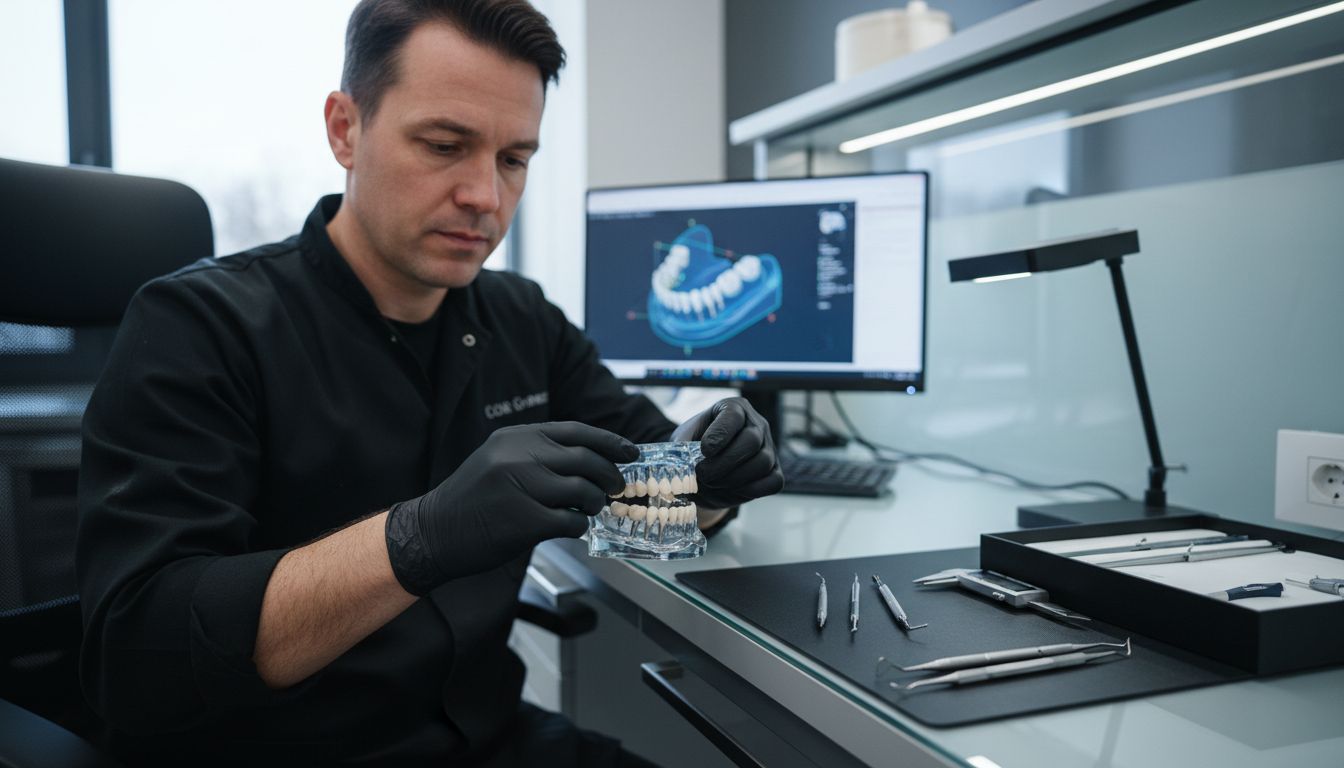
Implant-supported dentures offer two primary configuration options: removable and fixed designs. Cleveland Clinic explains that these configurations provide patients with flexible solutions tailored to individual dental needs and preferences. Removable implant-supported dentures allow patients to detach the prosthetic for thorough cleaning, while fixed versions remain permanently attached for maximum stability.
One of the most common attachment mechanisms is the ball attachment system. Wikipedia describes these attachments as utilizing a ball-shaped male abutment connected to a corresponding female housing, which enhances prosthetic retention and stability. This mechanism provides a secure yet adaptable connection between the dental implant and the denture, allowing for reliable performance and ease of maintenance.
Patients can typically choose between two primary attachment configurations. Bar-retained systems use a thin metal bar that follows the curve of the jaw, connecting multiple implants and providing a stable foundation for the denture. Ball-retained systems utilize individual ball-shaped connectors on each implant, offering more flexibility and independent attachment points. These different mechanisms allow dental professionals to customize solutions based on individual jaw structure, bone density, and patient requirements.
By understanding dental implant advancements, patients can make informed decisions about their prosthetic options. Key considerations when selecting an attachment mechanism include:
- Individual bone structure
- Jaw density and health
- Personal comfort preferences
- Cleaning and maintenance requirements
- Long-term durability expectations
Consulting with a specialized dental professional remains crucial in determining the most appropriate implant-supported denture type and attachment mechanism for optimal oral health and functionality.
Placement Process And Requirements
The placement of implant-supported dentures is a comprehensive, multi-step surgical procedure that requires meticulous planning and precise execution. Cleveland Clinic outlines the process as involving pre-prosthetic surgery, strategic dental implant placement, detailed impressions, and final denture attachment. This intricate approach ensures patients receive a customized, stable dental solution that addresses their unique oral health needs.
Initial preparation begins with a thorough diagnostic assessment to evaluate bone density, oral health, and overall candidacy for the procedure. Genesis Publications emphasizes that adequate bone structure represents a critical requirement for successful implant placement. Patients with insufficient bone volume may require additional procedures like bone grafting to create a solid foundation for the implants.
The surgical placement process typically involves several key stages. First, dental professionals surgically insert titanium implant posts into predetermined locations in the jawbone. These posts then undergo a healing period of several months, during which osseointegration occurs – the critical process where the implants fuse with the surrounding bone tissue. Following successful integration, custom-designed dentures are precisely fitted and attached to these implant posts, creating a secure and functional dental restoration.
By understanding dental implant care, patients can better prepare for this transformative procedure. Key requirements and considerations include:
- Sufficient jawbone density and quality
- Good overall oral and general health
- Commitment to rigorous oral hygiene
- Absence of uncontrolled chronic diseases
- Nonsmoking status or willingness to quit
- Financial readiness for the comprehensive procedure
Consultation with a specialized dental professional remains essential to determine individual suitability and develop a personalized treatment strategy for implant-supported dentures.
Benefits And Functional Advantages
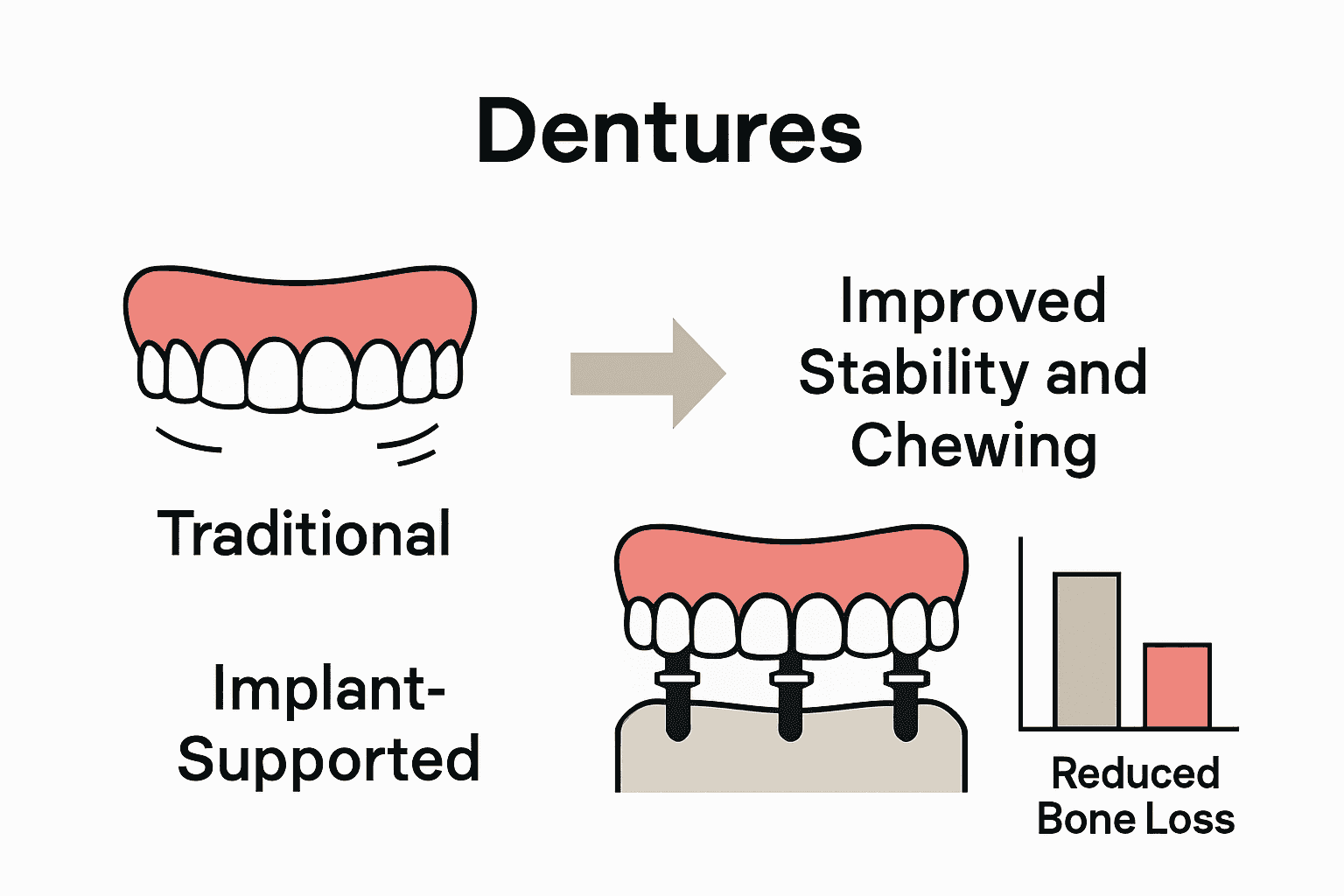
Implant-supported dentures represent a revolutionary advancement in dental restoration, offering patients dramatically improved quality of life compared to traditional removable dentures. Genesis Publications highlights that these innovative prosthetics provide enhanced stability, significantly improved comfort, and superior chewing efficiency that closely mimics natural teeth’s functionality.
PubMed research indicates that implant-supported dentures substantially improve masticatory performance, enabling patients to experience a more natural eating experience. This improved functionality stems from the secure attachment mechanism that prevents slipping, allows for greater bite force, and enables consumption of a wider variety of foods that might be challenging with traditional dentures.
Beyond functional improvements, implant-supported dentures offer profound psychological and physiological benefits. The secure foundation prevents bone deterioration, maintains facial structure, and provides patients with renewed confidence in social interactions. The prosthetics eliminate many common complaints associated with traditional dentures, such as speech difficulties, movement during eating, and the need for constant readjustment or adhesive applications.
By understanding implant-retained dentures, patients can appreciate the comprehensive advantages. Key benefits include:
- Improved chewing and speaking capabilities
- Prevention of jawbone deterioration
- Enhanced facial structure preservation
- Increased comfort and stability
- Reduced dietary restrictions
- Improved overall oral health
- Greater psychological confidence
Consultation with a dental professional remains crucial to determine individual suitability and develop a personalized treatment approach that maximizes these remarkable functional advantages.
Risks, Costs And Maintenance
Cleveland Clinic cautions that while implant-supported dentures represent an advanced dental solution, they are not without potential risks. Patients considering this procedure must understand the possible complications, which include surgical risks such as infection, potential nerve damage, and the rare possibility of implant rejection. These risks, though relatively low, underscore the critical importance of selecting a highly experienced dental professional for the procedure.
Financial considerations play a significant role in the decision-making process. Genesis Publications notes that while initial costs are substantially higher than traditional dentures, the long-term cost-effectiveness becomes apparent through the prosthetic’s durability and reduced need for frequent replacements. Patients should anticipate an investment ranging from several thousand to tens of thousands of dollars, depending on individual treatment complexity and the number of implants required.
Proper maintenance represents a crucial aspect of ensuring the longevity and performance of implant-supported dentures. Daily care involves meticulous cleaning techniques similar to natural teeth, including specialized brushing, flossing, and potential use of interdental cleaning tools. Regular professional dental check-ups every 4-6 months allow for comprehensive monitoring of implant health, potential adjustments, and early detection of any developing issues.
By understanding dental implant care, patients can mitigate potential risks. Critical maintenance considerations include:
- Consistent oral hygiene routine
- Using non-abrasive cleaning products
- Avoiding hard or extremely sticky foods
- Scheduling regular professional examinations
- Monitoring for signs of inflammation or discomfort
- Protecting implants during physical activities
- Maintaining overall health and nutrition
Professional consultation remains essential to develop a personalized maintenance strategy that addresses individual oral health needs and maximizes the longevity of implant-supported dentures.
Alternatives And Patient Considerations
Cleveland Clinic provides comprehensive insights into dental restoration alternatives for patients exploring options beyond implant-supported dentures. Traditional removable dentures and fixed dental bridges represent the primary alternative treatments, each offering distinct advantages and limitations. Patients must carefully evaluate their unique oral health conditions, lifestyle requirements, and long-term functional expectations when selecting an appropriate dental solution.
PubMed research highlights the critical importance of patient-reported outcomes and biomechanical considerations when comparing different dental prosthetic options. Patient evaluation involves a comprehensive assessment of multiple factors, including bone density, overall systemic health, budget constraints, and personal comfort preferences. The decision-making process requires a thorough understanding of each treatment’s potential benefits, risks, and long-term implications.
The primary alternative options include traditional removable dentures, fixed bridges, and partial dentures. Traditional removable dentures offer a more affordable initial investment but provide less stability and comfort compared to implant-supported solutions. Fixed bridges require adjacent healthy teeth for support and may involve more invasive preparation of surrounding dental structures. Partial dentures can be suitable for patients with some remaining natural teeth, offering a less comprehensive but potentially more cost-effective approach.
By understanding implant-retained dentures, patients can make informed decisions. Key patient considerations include:
- Current oral health status
- Bone density and jaw structure
- Budget and financial resources
- Long-term maintenance requirements
- Personal comfort and aesthetic preferences
- Overall health and healing capabilities
- Lifestyle and functional needs
Consultation with a specialized dental professional remains crucial to thoroughly evaluate individual circumstances and determine the most appropriate dental restoration strategy.
Discover Lasting Comfort with Implant-Supported Dentures at Vacaville Aesthetic Dentistry & Implants
Struggling with traditional dentures that slip or cause discomfort can impact your confidence, eating habits, and quality of life. Implant-supported dentures offer a stable and natural-feeling solution that addresses these challenges by anchoring securely to your jawbone, preventing bone loss and improving chewing ability. If you are seeking a permanent dental restoration that enhances function and appearance, understanding this advanced option is the first step to feeling secure and comfortable again.
Take control of your dental health today with expert care from Dr. Coral Posert at Vacaville Aesthetic Dentistry & Implants. Explore how our personalized implant treatments and comfort-first approach can transform your smile and restore your confidence. Don’t wait to experience the benefits of this revolutionary dental solution. Visit our website to learn more and schedule your consultation now. Your path to a more stable, natural smile begins here.
Frequently Asked Questions
What are implant-supported dentures?
Implant-supported dentures are dental prosthetics securely anchored to titanium posts surgically placed in the jawbone, providing a more stable and functional alternative to traditional removable dentures.
How do implant-supported dentures improve chewing and speech?
These dentures prevent slipping and movement during eating, allowing for greater bite force and enabling the consumption of a wider variety of foods. They also enhance speech clarity compared to traditional dentures.
What are the main types of attachment mechanisms for implant-supported dentures?
The primary attachment mechanisms include bar-retained systems, which use a metal bar to connect multiple implants, and ball-retained systems, which utilize individual ball-shaped connectors on each implant for flexibility and stability.
What are the risks and maintenance requirements for implant-supported dentures?
Potential risks include surgical complications such as infection and nerve damage. Maintenance involves daily cleaning similar to natural teeth, regular dental check-ups, and monitoring for signs of inflammation or discomfort.
Recommended
- Complete Guide to Oral Health and Implants – Vacaville Aesthetic Dentistry & Implants
- Understanding Dental Implants Care Guide for Better Health – Vacaville Aesthetic Dentistry & Implants
- 2025 Dental Implant Trends: Complete Guide for Patients – Vacaville Aesthetic Dentistry & Implants
- Dental Implants Materials: Complete Guide for Patients – Vacaville Aesthetic Dentistry & Implants

